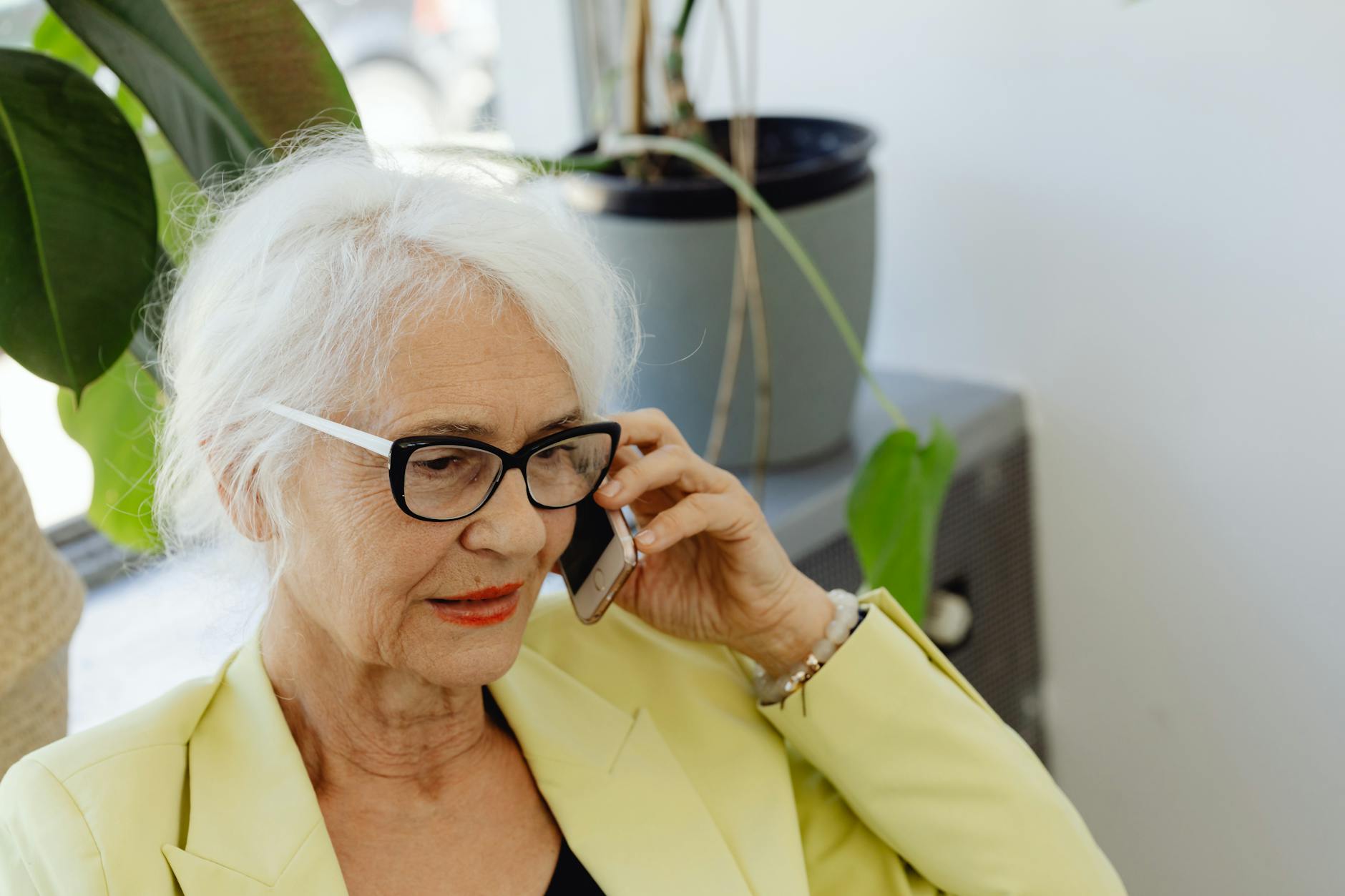
Tuesday afternoon, a retired schoolteacher in Upper Arlington falls in her bathroom. She isn't seriously injured but can't get up. Her daughter, who lives in Charlotte, calls every Sunday. Her neighbor — who usually catches her at the mailbox — is in Florida that week. Her son in Toledo calls Wednesday evenings. The pharmacy delivers her meds Friday. By the time anyone realizes she's not answering, it's Friday night. The CDC has a name for this: a "long-lie" fall. Mortality rates spike after about an hour on the floor — fluid loss, kidney damage, pressure ulcers, hypothermia in winter. It's not the fall that kills the senior. It's the wait.
Most isolated seniors aren't actually without people. They have daughters who love them, neighbors who wave, doctors they like, pharmacists who know them by name. What they don't have is anybody who would notice within 24 hours that something was wrong.
Median adult child calls aging parent: 1–2 times a week.
Median assisted-living check on independent residents: every other day.
Time before a pharmacy notices a missed pickup: about two weeks.
Average time between primary-care visits for seniors: three months.
The gap between "people who care about her" and "people who would notice in 24 hours" is enormous. That's where the bad outcomes live.
A daily call isn't just "is she alive." It's pattern detection.
Danielle — our AI wellness companion — listens for tone. A voice that's flatter than yesterday could mean depression. A voice that's slurring could be a TIA. Confusion about today's date is its own flag. So is mention of new pain, new shortness of breath, an unfamiliar bruise.
She remembers what your mom told her two weeks ago. She notes that the breakfast that used to be cereal-and-coffee is now just coffee. She flags the third missed call in a week. None of that requires the senior to push a button or open an app or remember anything.
Let's be clear: AI calling, on its own, isn't care. AI calling that hands flags to a real licensed nurse within minutes is.
When Danielle hears something concerning, a CooloCare RN in Columbus is on the phone with your mom within an hour. Family gets a same-day text. If something looks emergent, EMS is recommended and the family is walked through it. The Tuesday-to-Friday silence in Upper Arlington literally cannot happen if Danielle is calling every morning. By Wednesday morning, somebody knows.
That's the whole pitch. AI for daily presence. Humans for the moments that need humans. Senior gets noticed. Family stops bracing for the call.
"Danielle called my mom on a Wednesday and said she sounded 'a little off.' The CooloCare nurse called me by 11 AM. By 3 PM Mom was being treated for a UTI that I would have written off as 'she's just tired this week.' That UTI was already heading toward sepsis. The daily call wasn't a luxury. It was the timing."
— Patricia, daughter of CooloCare patient in Worthington
🛡️ If your loved one would be missed by Friday but not by Tuesday, don't wait. Book a free consultation or call (614) 858-3777.